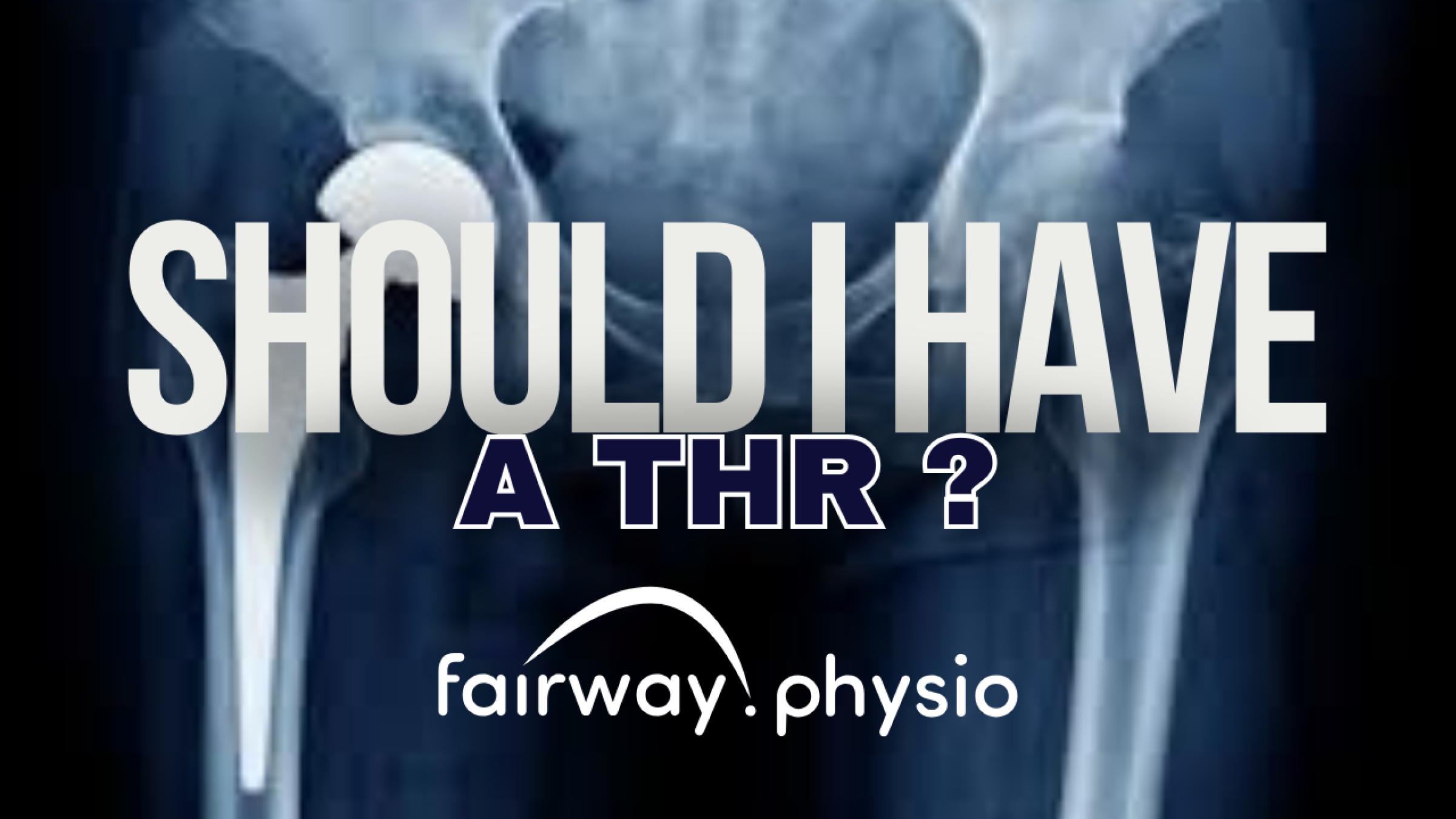
Should I Have a Hip Replacement? A Practical Guide to Making the Right Decision
If you’ve been told you have hip osteoarthritis, or you’ve been managing hip pain for some time, it’s very common to start wondering about a total hip replacement. For some people, it becomes the obvious next step. For others, it’s a decision that feels uncertain and difficult to time.
The truth is, there isn’t a single “right moment” that applies to everyone. The decision to have a hip replacement is based on a combination of your symptoms, your lifestyle, and how much your hip is impacting your quality of life.
This guide is designed to help you think clearly about those factors so you can make a confident, informed decision.
Understanding What a Hip Replacement Is Trying to Solve
A total hip replacement is designed to address pain and loss of function caused by joint degeneration. In simple terms, the worn surfaces of the joint are replaced to allow smoother, less painful movement.
But surgery doesn’t exist in isolation. It sits at the end of a spectrum of management options. Before getting there, it’s important to understand whether your current symptoms truly justify that step.
How Much Is Your Hip Affecting Your Life?
One of the most important considerations is not what your X-ray shows, but how your hip is affecting your day-to-day life.
Some people have significant arthritic changes on imaging but function quite well. Others have relatively mild changes but struggle with daily tasks.
Ask yourself:
Are you avoiding activities you used to enjoy because of pain?
Are my social activities depleting because of my symptoms?
Is walking becoming limited or uncomfortable over short distances?
Are simple tasks like putting on shoes, getting in and out of a car, or climbing stairs becoming difficult?
Is your sleep regularly disturbed by hip pain?
When pain and restriction begin to consistently limit your independence or enjoyment of life, that is often when surgery becomes a more serious consideration.
Timing Matters More Than People Think
There is a balance to be found with timing.
Some people wait too long, allowing their strength, mobility, and overall fitness to decline. This can make recovery after surgery more challenging. Others move toward surgery quite quickly without fully exploring conservative options that may have improved their symptoms significantly.
A useful way to think about timing is this: Have you given non-surgical management a genuine, consistent effort, and has it failed to provide meaningful improvement?
If the answer is yes, then surgery may be appropriate. If not, there is often still opportunity to improve things without going down the surgical route.
Can Physiotherapy Still Help You?
Physiotherapy plays a key role, even in people with established arthritis.
It cannot reverse the structural changes in the joint, but it can often improve how the joint functions and feels. Many people see meaningful improvements in:
Pain levels
Movement
Strength
Confidence in activity
Targeted exercise can reduce the load going through sensitive areas of the joint and improve how efficiently you move.
In practice, this means some people who initially feel they need surgery can delay it, or even avoid it, because their symptoms become manageable.
The Role of Your Home Exercise Programme
This is one of the most overlooked but important factors.
Physiotherapy is not just what happens in the clinic. The real progress comes from what you do consistently at home.
A well-structured home exercise programme is designed to:
Maintain mobility in the joint
Build strength around the hip
Improve control and movement patterns
However, its success depends heavily on your level of compliance. If exercises are done occasionally or abandoned after a few weeks, the results will be limited. On the other hand, people who commit to a regular routine often see significant benefits.
Before deciding on surgery, it is worth being honest with yourself. Have you fully committed to a structured rehab programme over a sustained period of time?
How Severe Are Your Symptoms?
Severity is not just about pain intensity. It is about the overall picture.
Consider:
How often you experience pain
How long it lasts
How easily it is aggravated
How much it limits your movement and activity
If your symptoms are constant, worsening, and resistant to appropriate rehabilitation, this shifts the balance more towards surgical intervention. If your symptoms fluctuate and respond to activity modification or exercise, there may still be room to manage things conservatively.
A Brief Note on Nutrition
Nutrition is not a cure for osteoarthritis, but it can support joint health and overall recovery.
Maintaining a healthy body weight is one of the most impactful factors, as it reduces the load going through the hip joint with every step.
A balanced diet that includes:
Adequate protein for muscle maintenance
Omega-3 fatty acids for general joint health
A wide range of fruits and vegetables for micronutrients
can support both your day-to-day function and, if needed, your recovery from surgery.
Some people explore supplements, but the evidence is mixed. They should be viewed as an addition to, not a replacement for, exercise and overall lifestyle management.
There Is No One-Size-Fits-All Decision
Deciding whether to have a hip replacement is not just about the joint itself. It is about you as a whole person.
Your goals matter. Your lifestyle matters. Your willingness and ability to engage in rehabilitation matters.
For some people, surgery provides a clear and necessary step to regain quality of life. For others, a well-managed conservative approach allows them to stay active and comfortable without it.
Final Thoughts
If you are unsure, the best next step is not to rush into a decision, but to get a clear, structured plan.
Work with a physiotherapist to:
Fully assess your current function
Trial a targeted rehabilitation programme and be consistent with your adherence
Monitor your response over time
From there, the decision becomes much clearer.
It is not about avoiding surgery at all costs, nor is it about rushing towards it. It is about choosing the right option at the right time for your situation.
You can discuss your hip pain with one of our expert therapists at www.fairway-physio.co.uk