Why Does My Hip Hurt When I’m at Rest?
Most people associate hip pain with movement. Walking, climbing stairs, or exercising are the usual triggers. So when pain starts to appear at rest, it often raises concern.
Resting pain can feel different. It may come on when sitting, lying in bed, or even wake you at night. In some cases it feels like a deep ache that is hard to settle, rather than a sharp pain linked to movement.
There are a few key reasons why this can happen. Understanding them helps guide what to do next.
When the Joint Becomes Irritable
In conditions such as osteoarthritis, pain is often linked to movement. However, as the joint becomes more sensitive, it can start to behave differently.
The tissues inside and around the joint can become irritated. When this happens, the joint does not tolerate load as well, but it also does not fully settle when you rest. Instead, it remains in a slightly aggravated state.
This can lead to:
A deep, constant ache in the hip or groin
Discomfort when sitting for long periods
Pain that builds later in the day after activity
Difficulty finding a comfortable position at night
In more advanced or “active” phases of joint irritation, the body produces a low level inflammatory response. This is not the same as a systemic inflammatory condition, but it is enough to make the joint feel more sensitive, even without movement.
Inflammation and Night Pain
Inflammatory-driven pain often has a recognisable pattern.
People may describe:
Pain that is worse at night
Stiffness after rest that takes time to ease
A dull ache that is hard to pinpoint
When you are moving, circulation increases and joints are lubricated, which can temporarily reduce symptoms. At rest, particularly when lying still for long periods, this effect is reduced and symptoms can become more noticeable.
Position also plays a role. Lying on the affected side can compress sensitive tissues around the hip, while lying on the opposite side may still place tension through the joint.
Is It Actually Coming From Your Back?
One of the most commonly overlooked causes of hip pain at rest is referral from the lower back.
The lumbar spine and hip are closely linked. Structures in the lower back, such as discs and joints, can refer pain into the hip, buttock, or even down the thigh.
This type of pain can behave differently to true hip joint pain.
You might notice:
Pain that spreads down the leg to below the knee
Symptoms that change with movement of the spine
Discomfort when sitting or lying in certain positions
A feeling that the pain is difficult to “stretch out” locally
Because this pain is being referred, the hip itself may not be the primary issue. Treating the hip alone in these cases often gives limited results.
Other Local Structures Around the Hip
Not all hip pain comes from the joint itself. The soft tissues around the hip can also be responsible.
For example, irritation of the tendons on the outside of the hip can cause pain when lying on that side. This is commonly felt over the bony point on the outer hip and can be particularly noticeable at night.
Similarly, muscles that have been overworked or are lacking strength can become sensitive and contribute to an aching sensation at rest.
How Physiotherapy Can Help
The key to managing rest pain is identifying the true source. From there, treatment becomes much more targeted.
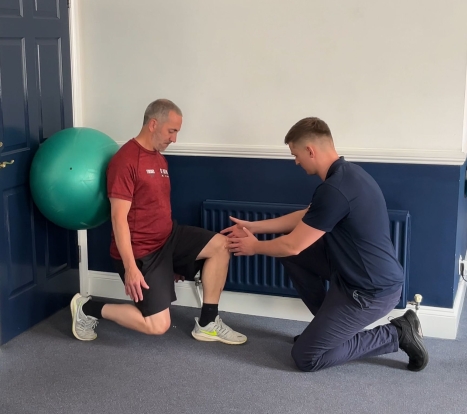
A physiotherapist will assess:
The location and behaviour of your pain
Your hip movement and strength
Your lower back function
How your symptoms respond to different positions and movements
From this, a clear plan can be developed.
If the hip joint itself is the main driver, treatment often focuses on improving how the joint is loaded and how it moves. This might include specific mobility work and strengthening exercises to support the joint and reduce irritation. If the issue is coming from the lumbar spine, treatment will shift towards improving spinal movement, posture, and control. In these cases, addressing the back can significantly reduce what feels like hip pain. If soft tissue irritation is the main factor, management may involve modifying positions that aggravate symptoms, alongside a progressive strengthening programme to improve the resilience of the tissues.
Practical Changes That Often Help
Small adjustments can make a noticeable difference with rest pain.
Improving sleep position is a common starting point. Using a pillow between the knees when lying on your side can reduce stress through the hip. Avoiding prolonged positions during the day and changing posture regularly can also help prevent symptoms from building.
Importantly, complete rest is rarely the answer. Gentle, regular movement tends to help calm symptoms more effectively than long periods of inactivity.
When Should You Get It Checked?
If your hip pain is:
Persisting at rest over several weeks
Waking you consistently at night
Not improving with simple changes
it is worth having it assessed.
If your hip pain is:
Associated with other medical symptoms such as:
Loss of weight and/or appetite,
Extreme fatigue
Pain in both legs
Bladder or bowel changes.
You should seek more urgent medical care.
Rest pain does not automatically mean something serious, but it does suggest that the issue may be more irritable or complex than a simple movement-related problem.
Final Thoughts
Hip pain at rest can feel confusing, especially when it is not clearly linked to activity. In many cases, it reflects an increase in joint sensitivity, a low level inflammatory response, or pain being referred from the lower back.
The important thing is that it is not something you need to guess your way through. With the right assessment and a targeted plan, most causes of rest pain can be managed effectively.
Understanding where the pain is coming from is the first step towards settling it.
If you would like your hip pain assessed by one of our therapists, you can book an appointment at www.fairway-physio.co.uk